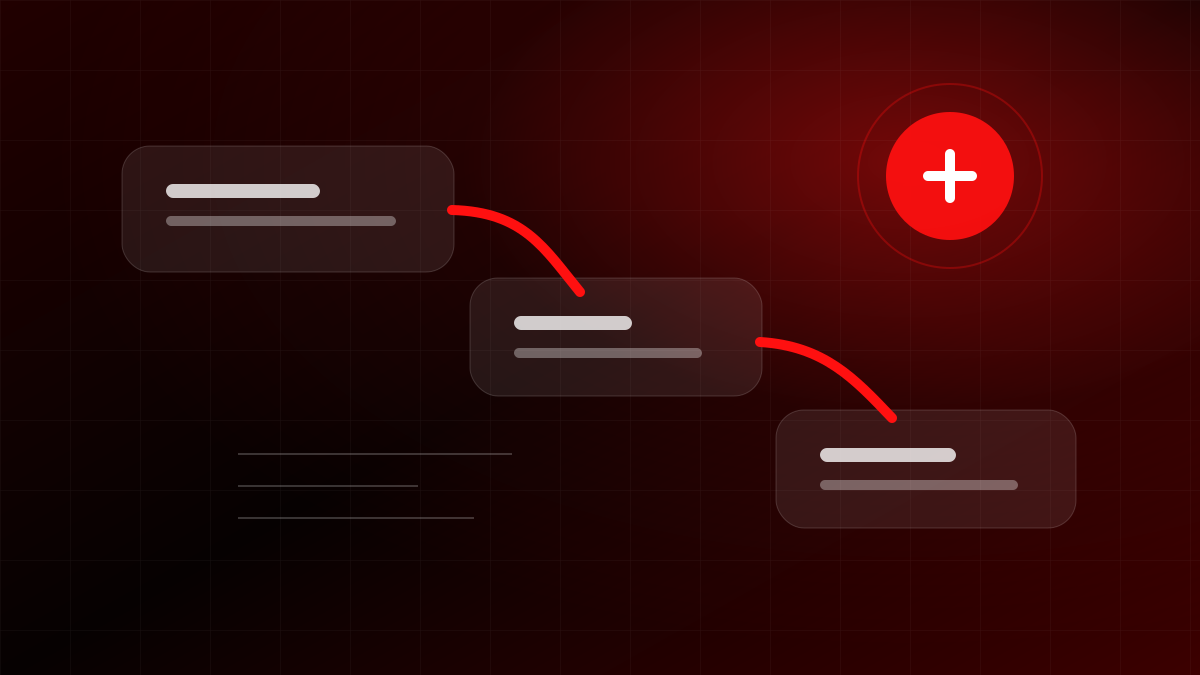
Search pages that target real demand
We map services, locations, buyer questions and AI-search intent, then turn that map into landing pages with clean internal links and answer-first sections.
SEO and Generative Engine Optimization (GEO) websites with AI execution layers
We build high-converting web systems that rank locally, explain your offer clearly, and make your business easier for search engines and AI systems to understand.
Nexus Web creates sites that do more than look modern. We structure pages around real search demand, build the SEO foundation from day one, add Generative Engine Optimization (GEO) signals, and connect AI tools where they make operations faster.
We map services, locations, buyer questions and AI-search intent, then turn that map into landing pages with clean internal links and answer-first sections.
Technical structure, metadata, schema, headings and content hierarchy are designed with the interface, not added after launch.
We connect chatbots, lead qualifiers, content helpers, quote flows and internal dashboards where they create measurable leverage.
From market map to live website, each step pulls the project closer to launch.
We audit locations, competitors, search intent and your current offer before a single section is designed.
We turn the research into page structure, messaging, UX states and the content hierarchy users need.
We implement chat, lead routing, internal tools or automation flows directly into the web experience.
We ship, track behavior, refine pages and expand the geo footprint when the first signals are clear.
[ services ]
[ search-ready pages ]
Each service has a dedicated URL, one clear H1, answer-first copy, FAQ schema, Service schema and internal links so search engines and AI systems can classify the offer.
A direct answer page for businesses comparing agencies that combine websites, SEO, GEO, schema and AI visibility.
02For companies that need a conversion site with SEO architecture and Generative Engine Optimization.
03For teams that want AI tools, lead workflows and web UX designed as one system.
04For businesses that need clearer entity signals and citation-worthy AI-readable content.
05For existing websites that need canonical, schema, content and internal-link cleanup.
06For sites that are not mentioned or cited in ChatGPT, Gemini, Perplexity or AI search answers.
07For brands that want service pages, articles and proof blocks designed for answer engines.

We find which geo pages can bring demand fastest.
We define the AI layer that saves real time, not fake complexity.
We outline a launch plan you can actually execute.
Real launch stories across AI visibility, medical logistics, car import and local service websites.
The company, services, audience, geography and proof are stated in visible copy and schema.
Generative Engine Optimization (GEO) pages answer the questions AI systems need to parse.
Structure, speed, schema and content are treated as design requirements.
Strategy, design, development and implementation in one tight feedback loop.

Owns architecture, launch logic, AI implementation and the technical route from idea to working system.

Turns dense offers into clean pages, visual hierarchy and interfaces that feel sharp without becoming noisy.
[ FAQ ]
Generative Engine Optimization (GEO) makes website content easier for AI systems and answer engines to understand, summarize and cite. It uses clear entities, answer-first content, schema, FAQs, proof and useful expert pages.
SEO focuses on crawlability and visibility in traditional search engines. GEO builds on SEO by making the site more understandable for AI systems such as ChatGPT, Gemini, Perplexity and Google AI-style answers.
Yes. No agency can guarantee AI citations, but a site can be made much easier to evaluate through clear service pages, structured data, FAQ blocks, citation-worthy articles, case studies and external corroboration.
An AI-readable website has crawlable HTML pages, one clear topic per URL, visible company and service details, schema.org JSON-LD, helpful definitions, proof, FAQs and internal links between services, articles and case studies.
Yes. Schema helps machines identify the organization, website, services, FAQs, articles and breadcrumbs. It is most useful when it matches strong visible content instead of replacing it.
Technical fixes can be implemented quickly. Meaningful visibility usually grows through a phased plan: service pages, schema, FAQ content, expert articles, case studies and external mentions.
It reviews whether AI systems can identify the company, understand its services, find structured data, cite useful pages, see proof, and compare the site against competitors that already appear in AI answers.
Tell us what you want the website to do: rank locally, automate leads, explain a complex service or become an internal tool.

 Teleport Unlimited
 BeeCars
 Brooklyn Handyman